
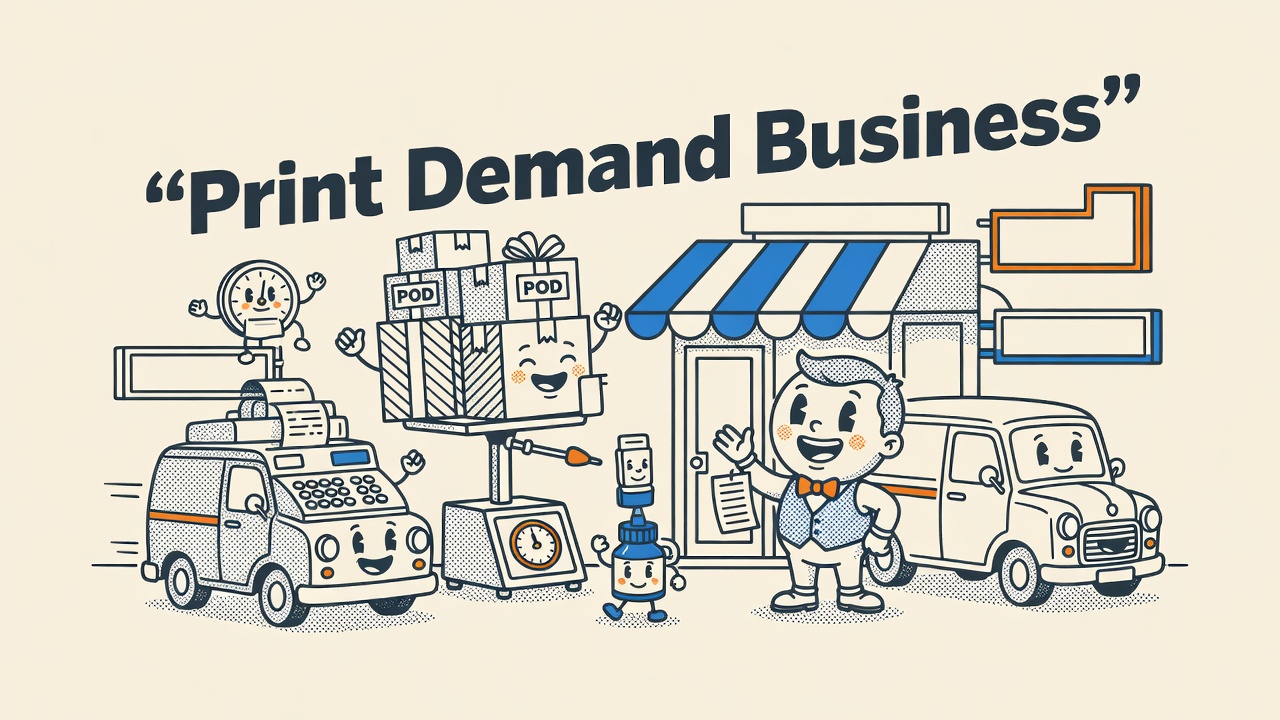
TL;DR: What is the print on demand business model? It’s a fulfillment method where products are made only after a customer orders, so you never buy inventory upfront. You create designs, list products, and a third-party supplier prints and ships each order directly to your customer. Your profit is the gap between your retail price and the supplier’s base cost.
What Is the Print on Demand Business Model and How Does It Work?
What is the print on demand business model? It’s a fulfillment approach where you sell custom-printed products without holding any stock. A supplier creates each item only after a customer buys it, then ships it directly to that customer under your brand name.
The workflow is straightforward. Pick a product (a t-shirt, mug, or poster), upload your design, and list it in your store at the price you choose. When a customer orders, your POD supplier receives the notification automatically, prints the item, packages it, and ships it out. You never touch the product, manage a warehouse, or deal with unsold inventory.
This model removes two of the biggest barriers to starting an ecommerce business: upfront inventory costs and storage requirements. You can launch a store with zero stock, test dozens of designs quickly, and scale what sells. That’s why the pod business model attracts artists, content creators, and first-time entrepreneurs who want a lean start with minimal financial risk.
Is Print on Demand Profitable in 2026?
Yes, print on demand is profitable in 2026, but not automatically. Margins are thinner than traditional wholesale retail because the per-unit cost from your supplier is higher when you’re not buying in bulk. A plain t-shirt might cost $12 from a POD supplier. Sell it for $25 and your gross profit is $13, before shipping, platform fees, and advertising.
The sellers who profit consistently focus on three things: tight niche selection, strong designs, and smart pricing. Broad, generic products with generic quotes compete on price alone and race to the bottom fast. Niche products built around a specific audience (nurse humor, golden retriever owners, vintage motorcycle fans) command higher prices and generate repeat buyers who feel a real connection to the brand.
Marketing is a real cost many beginners ignore. Organic traffic from Etsy SEO is possible, but paid ads on Meta or Pinterest accelerate results significantly. Build your pricing to include a marketing budget from day one. If you price only to cover production, you’ll always feel like margins are too thin to grow, because they will be.
Best Products and Niches for Your Print on Demand Store
The best-selling POD products tend to be wearables and home goods. T-shirts, hoodies, mugs, tote bags, posters, and phone cases have proven demand across every major platform. Newer formats like embroidered hats, canvas prints, and custom puzzles are growing quickly and face less competition right now. Printful’s product catalog is a good starting point for seeing which formats are currently available and trending.
Print on demand niche selection matters more than product selection. A generic t-shirt store struggles. A t-shirt store for Labrador retriever owners with clever inside jokes? That’s a targeted audience with real buying intent. Good niche criteria: the audience is passionate, they have spending power, the niche isn’t already saturated with POD stores, and you can create repeatable designs across multiple product types.
Niches that consistently perform in print on demand include hobbies (fishing, hiking, yoga), professions (nurses, teachers, firefighters), pet owners, family milestones (new parents, grandparents), and pop culture communities where licensing permits. Avoid niches that require celebrity likenesses or trademarked logos. That path leads to DMCA takedowns and permanent account bans on Etsy and Shopify alike.
Print on Demand vs. Dropshipping: Key Differences
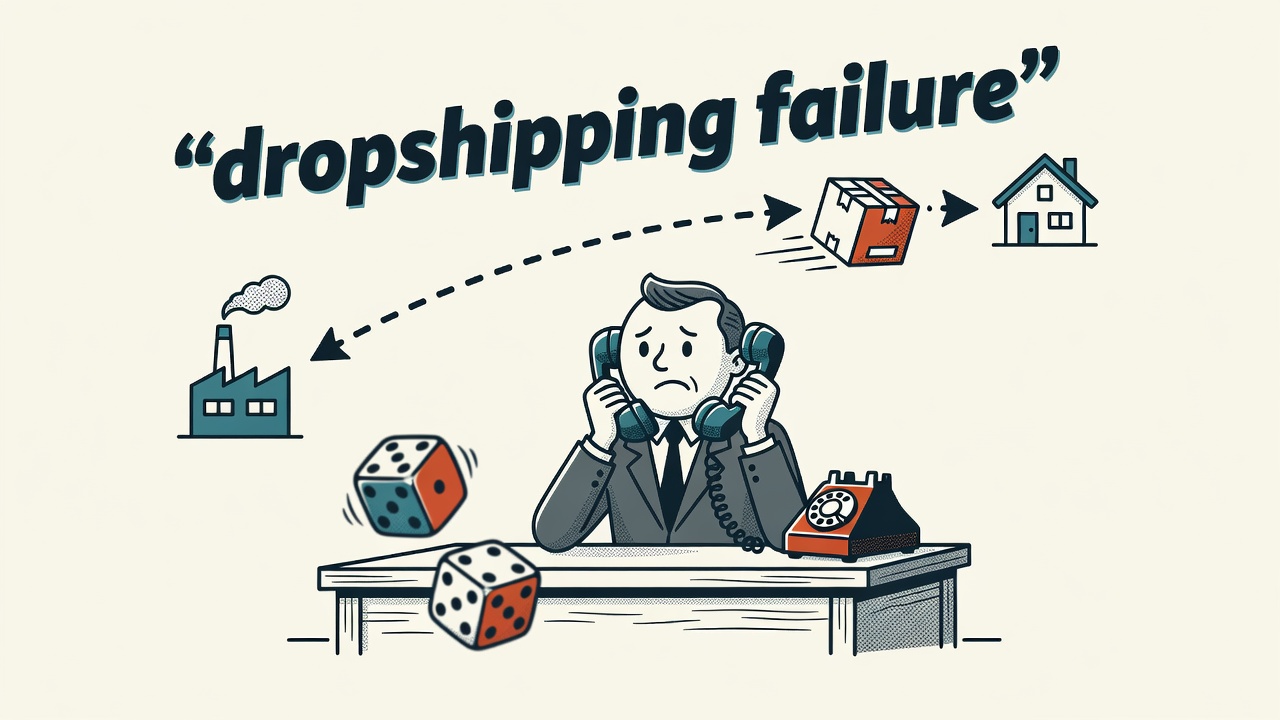
People often confuse print on demand with general dropshipping. Both models use third-party fulfillment and require no inventory from you. The key difference: standard dropshipping sells existing, pre-made products from a supplier’s catalog. Print on demand creates each product fresh with your custom design at the time of the order.
This means POD products are unique to your brand. A customer can’t find the exact same item cheaper on AliExpress or any other marketplace. That’s a significant advantage for brand building and price control. The tradeoff is that POD per-unit costs are higher than bulk dropshipping, and production times add 2-5 business days before shipping even begins, which can affect customer expectations.
Custom merch dropshipping is another term used for the same POD model. The naming varies by platform and guide, but the mechanics are identical: a custom product, made on demand, shipped directly to your customer. If you see these terms used interchangeably, they’re describing the same fulfillment structure with the same cost and timeline considerations.
Pro Tip: Before you launch publicly, order a sample of every product you plan to sell. Print quality varies between suppliers and even between product types at the same supplier. A $5 sample order can save you from a wave of negative reviews and costly refund requests once real customers start buying.
Best Platforms and Suppliers for Print on Demand Ecommerce
The two most popular platforms for a print on demand store are Shopify and Etsy. Shopify gives you full control over your brand, customer data, and store design. You connect a POD app like Printful or Printify and orders flow automatically. Monthly costs start at $39, so you need consistent sales volume to make it profitable from the start.
Etsy has built-in traffic from buyers already searching for custom and handmade products. For new sellers, Etsy’s marketplace discovery lowers the initial marketing burden significantly. The tradeoff is less brand control, listing fees, and transaction fees on every sale. Many successful POD sellers start on Etsy to validate their designs and niche, then expand to Shopify once they have consistent revenue and a growing customer base.
WooCommerce is a solid option if you already run a WordPress site, with lower ongoing costs but more technical setup required. For print on demand suppliers, Printful handles production in-house for more consistent quality. Printify uses a network of print partners, which gives you broader product variety and sometimes lower base costs. Other suppliers worth researching include Teemill for sustainable products and The Fulfillment Lab for branded packaging options that elevate the unboxing experience.
What Is the Print on Demand Business Model Worth? Pricing and Margins Explained
What is the print on demand business model really about? The margin math. Your profit on each sale is your retail price minus the base product cost, shipping charges, platform transaction fees, and advertising spend per conversion. That chain of costs is longer than most beginners expect, so map it out before you ever set a price publicly.
A standard breakdown for a $25 t-shirt: $12 base cost to the POD supplier, $4.99 shipping, $1.50 in platform transaction fees, and roughly $3 in advertising cost per sale. That leaves about $3.51 net profit per unit. Not impressive on its own, but highly scalable when daily orders reach 20, 50, or 100 units across multiple products and designs.
The levers you control are your retail price and your marketing efficiency. Raise prices in niches where buyers expect to pay a premium (personalized gifts, professional-identity products, anniversary items). Lower your cost per conversion through sharper targeting and stronger creative assets. Most optimized print on demand businesses run at 20-30% net margins. High-niche stores with loyal repeat audiences regularly hit 40% or more.
Quick Takeaways
- Print on demand is an inventory-free business model: products are made after each order and shipped directly to your customer by a third-party supplier.
- Profitability depends on niche selection, pricing strategy, and marketing efficiency, not the POD model itself.
- T-shirts, mugs, hoodies, and wall art are top-selling POD products. Niche stores consistently outperform generic ones.
- Shopify gives brand control; Etsy provides built-in traffic. Many successful sellers use both channels at the same time.
- Printful and Printify are the most widely used POD suppliers, each with different strengths in quality consistency and product range.
Frequently Asked Questions
- What is the print on demand business model?
- The print on demand business model is an inventory-free fulfillment approach where products are created only after a customer places an order. You upload designs, list products in your store, and a third-party supplier prints, packs, and ships each order directly to the customer. Your profit is the difference between your retail price and the supplier’s base production and shipping cost.
- What is the difference between print on demand and dropshipping?
- Standard dropshipping sells existing, pre-made products from a supplier’s catalog without any customization. Print on demand applies your unique design to a blank product at the time of each individual order. This makes POD products exclusive to your brand, which supports stronger pricing and customer loyalty, though per-unit costs tend to be higher than what you would pay in bulk dropshipping arrangements.
- Which print on demand suppliers are most reliable?
- Printful and Printify are the most widely used and reliable POD suppliers for ecommerce sellers. Printful manages production in-house for consistent print quality and integrates directly with Shopify, Etsy, and WooCommerce. Printify connects you to a network of print partners for broader product selection and competitive base costs. Teemill is a strong alternative if sustainability and eco-friendly packaging are priorities for your brand.
- How do print on demand profit margins work?
- Your profit margin equals your retail price minus the supplier’s base product cost, shipping charges, platform transaction fees, and any advertising spend per sale. On a $25 t-shirt with a $12 base cost, after accounting for all fees and a modest ad budget, net profit per unit often lands between $3 and $8. Stores that optimize their niche targeting and ad efficiency regularly achieve 20-30% net margins.
- Is print on demand a good model for beginners?
- Print on demand is one of the most beginner-friendly ecommerce models available today. There are no upfront inventory costs, no warehouse or storage needs, and most POD platforms integrate with Shopify and Etsy in a few simple steps. The main challenge for beginners is learning how to price for real profit, choose a focused niche, and drive consistent traffic through SEO or paid advertising.
Prices accurate as of October 1, 2026