
TL;DR: The Amazon FBA vs FBM comparison comes down to product size, velocity, and your existing logistics setup. FBA wins for fast-moving, standard-size products where Prime eligibility drives conversions. FBM wins for oversized, slow-moving, or custom products where Amazon’s storage and size-tier fees eat your margin.
Choosing the wrong fulfillment method on Amazon is one of the fastest ways to quietly destroy a profitable product. The Amazon FBA vs FBM comparison isn’t a question of which is generally better. It’s a question of which is better for your specific product, your volume, and your cost structure.
The Exact Difference Between FBA and FBM
| Dimension | FBA | FBM |
|---|---|---|
| Storage | Amazon fulfillment center | Your warehouse or 3PL |
| Pick, pack, ship | Amazon handles it | You or your 3PL |
| Prime eligibility | Automatic | Only via Seller Fulfilled Prime |
| Customer service | Amazon handles it | You or your team |
| Returns | Amazon processes them | You manage the policy and process |
| Main cost driver | Fulfillment and storage fees | Carrier rates, labor, and packaging |
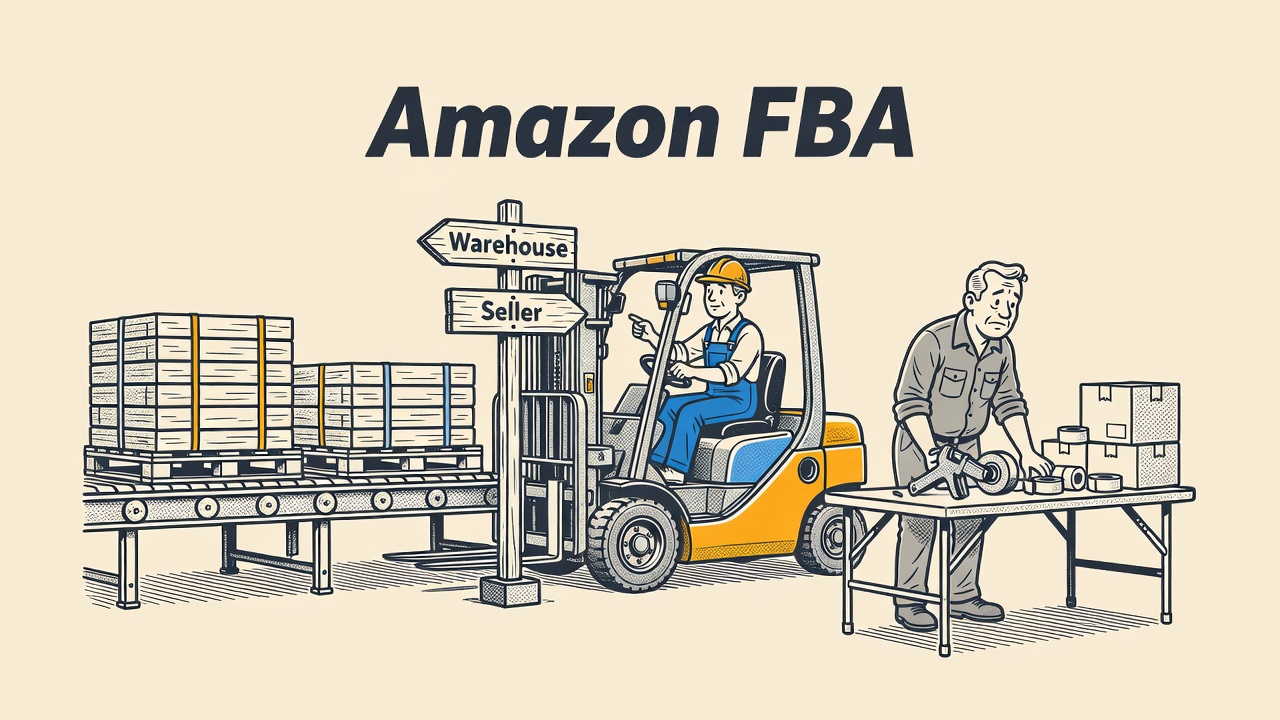
Fulfillment by Amazon (FBA) means you ship inventory to Amazon’s fulfillment centers, and Amazon handles storage, picking, packing, shipping, customer service, and returns on your behalf. FBA listings are automatically Prime-eligible. Customers see the Prime badge and the fast, free shipping promise that comes with it.
Fulfillment by Merchant (FBM) means your business, or a third-party logistics provider you hire, manages all of those functions. You pick the carrier, set the shipping speed, manage the tracking, and handle any return or refund inquiry that comes in. Neither model is inherently superior. Each one transfers a different set of costs and responsibilities. The right answer depends on what those costs actually are for your specific product.
FBA vs FBM Cost Comparison for Small and Standard-Size Products
For small, lightweight products that sell quickly, FBA typically wins on total cost once you factor in Prime conversion and the warehouse labor you’d spend shipping yourself.
Amazon’s fulfillment fee for a small standard item covers pick, pack, and ship at a rate that’s hard to beat if you’re shipping individual units yourself. When you add Prime conversion, the math tilts further. A Prime badge can meaningfully lift your conversion rate on competitive listings, which lowers your effective cost-per-sale even when the per-unit fee looks higher at first glance.
The trap many sellers fall into is comparing only the visible Amazon fee to a carrier quote. That ignores warehouse labor, packaging materials, software costs, customer service time, and the opportunity cost of managing logistics yourself. For high-volume, small-format products, FBA typically covers all of that at a competitive total rate. Run the full cost-per-shipped-order, not just the line-item fee, before drawing a conclusion.
Worth Knowing: Amazon’s FBA Revenue Calculator is a free tool inside Seller Central that lets you enter an ASIN and your own fulfillment costs side by side. Use it for every new product before you commit to a fulfillment method. Pair it with a shipping rate calculator from your carrier to build the honest FBM cost, including labor and packaging, not just postage.
Illustrative cost breakdown: 10 oz small standard item, $24 sale price
| Cost line | FBA (approx.) | FBM self-ship (approx.) |
|---|---|---|
| Pick, pack, and ship | $3.58 (Amazon fee) | $4.00-5.50 (commercial carrier) |
| Packaging materials | Included | ~$0.75 |
| Pick and pack labor | Included | ~$1.50 |
| Customer service and returns | Included | Your overhead |
| Estimated total per order | ~$3.58 plus storage | ~$6.25-7.75 or more |
FBA fee based on Amazon’s published small standard 8-12 oz fulfillment rate; verify current rates in Seller Central since they update annually. FBM figures are typical ranges — your carrier contract and labor setup will differ. Run your actual numbers through Amazon’s FBA Revenue Calculator for a product-specific result.
Amazon FBA vs FBM for Oversized and Low-Velocity Products
FBM wins for oversized and slow-moving products. Amazon’s size-tier fees and monthly storage charges can turn a profitable bulky item into a losing SKU before you’ve accounted for the referral fee.
Amazon charges monthly storage fees that rise sharply in Q4 and escalate further for inventory held beyond 365 days as a long-term storage surcharge. For a slow-moving oversized product, those charges pile up fast. Check the current rate card in Amazon Seller Central before committing inventory, since fee tiers are updated annually. Keeping inventory in your own warehouse or at a 3PL lets you pay a flat rate and avoid that escalating schedule entirely.
FBM is also the right default for products with unpredictable lead times. Hazmat items, custom products needing special handling, and made-to-order goods often can’t be pre-positioned at a fulfillment center in any practical way. For these, FBM or a dedicated 3PL gives you the control that FBA can’t.
How FBA Affects the Buy Box and Seller Fulfilled Prime
FBA gives you a structural Buy Box advantage. Amazon’s algorithm uses shipping speed, fulfillment reliability, and seller performance metrics as documented Buy Box criteria, and FBA satisfies the shipping and reliability requirements automatically because Amazon controls the process end to end.
Prime eligibility is the underlying driver. Customers filter by Prime on a large share of searches, and a non-Prime FBM listing won’t appear in those filtered results. With Amazon reporting more than 200 million Prime members globally, a large share of shopping sessions on the platform use the Prime filter — and non-Prime FBM listings are invisible to every one of those searches. For any product where you’re competing against other sellers or against Amazon itself, FBA’s Buy Box and Prime advantages are real and worth pricing into your decision. FBM sellers can compete for the Buy Box, but they need excellent on-time shipment rates, low defect rates, and competitive pricing to do it consistently.
Seller Fulfilled Prime (SFP) is the middle path: a program that lets FBM sellers earn the Prime badge by meeting Amazon’s delivery performance requirements directly. To qualify, you must ship from your own warehouse or 3PL and consistently hit Prime-speed delivery and on-time rates. Amazon’s published SFP requirements include a minimum on-time delivery rate of 93.5%, a valid tracking rate of 99% or higher, and a seller-initiated cancellation rate no greater than 0.5% on Prime orders. Verify current thresholds in Seller Central before enrolling, since Amazon updates program requirements periodically. Miss any metric and you lose the SFP designation.
SFP works best for sellers who already run a high-performance logistics operation with same-day or next-day carrier pickups and reliable, carrier-grade tracking. For those sellers, it combines the Prime conversion benefit with FBM cost control, and access to a carrier network that supports Prime speeds makes it viable. If your operation isn’t already at that standard, most sellers are better served by choosing between standard FBA and standard FBM and revisiting SFP once their logistics are mature.
Pro tip from Ronen Abudi, e-commerce and GEO specialist (ronenabudi.com): If you sell a product through both FBA and FBM at the same time (a hybrid setup), keep a small FBM buffer ready for when FBA stock runs out. Switching to FBM mid-stockout is faster than waiting for a new shipment to check in at a fulfillment center, and it keeps the listing active instead of going dark.
FBA vs FBM for Private Label and High-Volume Products
Private label sellers almost universally start with FBA, and the math supports it: when you own the ASIN and compete with no other sellers on the listing, Prime eligibility is pure conversion lift.
High-velocity, standard-size private label products are exactly the profile FBA was designed for. Amazon handles the operational complexity while you focus on sourcing, marketing, and growing the catalog. The risk surfaces at scale, when storage becomes a constraint. Sending too much stock results in long-term storage fees. Sending too little means stockouts that damage your listing’s search ranking. Inventory planning tools that integrate with Seller Central help manage this, but it requires active attention.
Many established private label sellers run a hybrid: FBA for their core fast-movers and FBM or a 3PL for slower SKUs and inventory overflow during peak season. A profit analytics dashboard can show you by SKU where FBA is working and where FBM would be more profitable. Running this analysis quarterly is a practical habit, not a one-time exercise, because Amazon adjusts fee structures and product velocity changes over time.
Returns, Customer Service, and the Hidden Costs of Each Method
FBA handles customer service and returns for you, but that convenience costs more than a line-item fee. FBM makes those costs visible as staff time and software spend. Both carry real friction, just in different places.
With FBA, Amazon makes the call on return approvals, often in the customer’s favor, and you have limited ability to intervene. Refunds get issued, returned inventory sometimes gets marked unsellable, and your metrics are partly outside your control. That’s the trade-off for handing off the operational burden.
With FBM, you handle every customer interaction yourself or through a third-party service. Customer messages need responses within 24 hours to keep your account in good standing. Returns need a clear, competitive policy. For sellers with small catalogs and manageable volume, this is achievable. At scale, it becomes a real overhead line on the P&L. Using a customer service tool built for Amazon sellers can keep that cost from spiraling, but it’s a cost that FBA absorbs by default.
The honest Amazon FBA vs FBM comparison treats returns and support as real cost inputs on both sides. FBA isn’t free from returns friction; it just moves that friction to fee lines and lost sellable inventory. FBM isn’t free from support burden; it just makes the burden visible as a staff line item. Factor both into your total landed cost model before deciding.
For further reading on fulfillment strategy, the Amazon FBA overview on Seller Central covers how fees and program requirements are structured for each method.
Quick Takeaways
- FBA handles storage, shipping, customer service, and returns; FBM puts all of that on you or your 3PL.
- For small, fast-moving, standard-size products, FBA typically wins on total cost when Prime conversion is included.
- For oversized, slow-moving, or low-margin products, FBM or a 3PL avoids Amazon’s escalating storage and size-tier fees.
- FBA provides a structural Buy Box and Prime eligibility advantage that FBM sellers must work hard to offset.
- Seller Fulfilled Prime lets FBM sellers earn the Prime badge, but only with a high-performance, carrier-grade shipping operation.
- Run a total-cost-per-order model, not just a fee comparison, before choosing a fulfillment method for any new product.
Frequently Asked Questions
- What is the main difference between FBA and FBM on Amazon?
- With FBA, you ship inventory to Amazon’s fulfillment centers and Amazon handles storage, packing, shipping, customer service, and returns. With FBM, your business or a third-party logistics provider manages every step of that process. FBA listings are automatically Prime-eligible; FBM listings are not unless you qualify for Seller Fulfilled Prime.
- Is FBA cheaper than FBM for small products?
- For small, lightweight, fast-moving products, FBA is often cheaper on a total-cost-per-order basis when you account for Prime conversion, warehouse labor, packaging materials, and customer service overhead in the FBM calculation. Comparing only Amazon’s fulfillment fee to a carrier quote gives an incomplete picture and typically understates FBM’s true cost.
- When does FBM make more sense than FBA for oversized items?
- FBM is usually the better choice for oversized products because Amazon’s size-tier fulfillment fees rise sharply for large or heavy items, and monthly storage fees compound quickly for slow-moving stock. Keeping oversized inventory in your own warehouse or at a 3PL lets you pay a flat storage rate and ship at a negotiated carrier rate instead.
- Does FBA really improve your chances of winning the Buy Box?
- Yes. Amazon’s Buy Box algorithm favors listings that meet fast shipping standards reliably, and FBA satisfies that requirement automatically because Amazon controls the fulfillment. FBM sellers can win the Buy Box by maintaining strong on-time shipment and defect metrics at a competitive price, but FBA removes most of that operational risk by default.
- Can FBM sellers get the Prime badge?
- Yes, through the Seller Fulfilled Prime program. To qualify, FBM sellers must ship orders from their own warehouse or 3PL and consistently meet Amazon’s Prime delivery speed and on-time rate requirements. Amazon’s SFP program requires a minimum on-time delivery rate of 93.5%, a valid tracking rate of 99% or higher, and a seller-initiated cancellation rate no greater than 0.5% on Prime orders (check Seller Central for the current version). SFP works best for sellers who already run a high-performance logistics operation rather than those building from scratch.