
TL;DR: AI tools for small online stores now handle the tasks that eat your time: writing product copy, answering customer questions, personalizing email campaigns, and tracking competitor prices. Most start at $0 to $50 per month. This guide shows exactly which tools to use and where to start.
Why AI Tools for Small Online Stores Have Become Accessible
AI tools for small online stores used to mean expensive, custom-built software that only enterprise retailers could afford. That changed fast. The global AI in retail market topped $9 billion in 2024 and is projected to exceed $45 billion by 2032, and that growth pushed vendors to compete on price. Today, the most useful tools run on freemium or low-cost SaaS tiers, with many offering full-featured plans under $50 per month.
The practical categories are clear: content and copy generation, customer service automation, email personalization, pricing intelligence, inventory forecasting, and visual design each solve a real problem that slows small store operators down. You do not need to adopt every category at once. Pick the one area where you lose the most time each week and start there.
One note before diving in: AI tools work best when you have a clear goal and defined rules. A chatbot without a proper FAQ knowledge base is just a frustrating pop-up. A pricing tool without margin guardrails will slash prices you cannot afford to cut. Set the rules first. Then let the AI work within them.
1. AI Product Description Generators: Write Smarter, Rank Higher
Writing product descriptions is one of the biggest time sinks in ecommerce. AI product description generators cut that burden significantly. Shopify Magic is built into every Shopify store at no extra cost and generates descriptions, email subject lines, and FAQ answers from a few bullet points you provide. For WooCommerce users, tools like Jasper AI and Copy.ai integrate into your workflow and produce optimized copy in seconds.
The first pass is not always perfect, but the draft is strong enough that editing takes a fraction of the time writing from scratch would. AI-generated product descriptions can improve conversion rates by 10 to 30% when optimized for buyer intent, because the models draw on patterns from millions of high-performing product pages. That same optimization helps organic search rankings when you feed the tool your target keywords before generating.
The process is simple. Input your product name, key features, and target customer. Set the tone (technical, casual, premium). Review and tweak the output. For stores with large catalogs, this alone saves hours every week. Pair it with an AI SEO tool like Surfer SEO or Semrush AI to validate keyword placement before publishing, and your product pages become a dual-purpose asset: they sell and they rank.
2. AI Chatbots for Shopify and WooCommerce Stores
AI chatbots can handle up to 80% of routine customer service inquiries without any human involvement. For a small team, that changes the economics of support. The two tools most suited to small stores are Tidio and Gorgias. Tidio offers a freemium plan with an AI bot that resolves order status questions, handles FAQs, and recommends products. It integrates natively with both Shopify and WooCommerce. Gorgias connects directly to your store data, order history, and customer tags, giving the AI full context before it replies.
Chatbots also act as real-time cart abandonment tools. When a shopper lingers on a checkout page without completing the purchase, a well-configured chatbot triggers a message offering help or a small incentive. This type of intervention can recover 5 to 15% of otherwise lost carts. Combined with an AI-powered abandoned cart email sequence, you have a recovery system running around the clock with no manual effort.
For Shopify stores, the native Shopify Inbox now includes basic AI reply suggestions, which is a solid starting point before committing to a paid platform. For WooCommerce, Tidio’s free plan is the most practical entry point. Either way, build a structured list of your 10 most common customer questions before you go live. The AI performs significantly better when it has a clear knowledge base to draw from rather than guessing from scratch.
3. AI Pricing Optimization and Personalization for Small Stores
AI pricing tools monitor competitor prices, demand trends, and your inventory levels, then adjust your prices within the rules you define. You stop reacting manually when a competitor undercuts you or when demand spikes around a product. Prisync is a strong option for small stores, tracking competitor pricing across the web and triggering repricing events automatically. Research shows AI-driven dynamic pricing can improve gross margins by 5 to 15%, a meaningful number at any volume.
Personalization works alongside pricing to lift average order value. Tools like Rebuy (Shopify) and Nosto analyze each returning customer’s browsing and purchase history to surface relevant product recommendations across your homepage, product pages, and email flows. This goes beyond a “you may also like” widget. These platforms adjust entire page layouts and content blocks based on individual data. AI-driven personalization consistently increases average order value by 15 to 25% for stores that implement it with proper setup.
Octane AI adds a quiz-based personalization layer that is especially effective for stores with large catalogs. A customer answers a few questions about their needs, and the AI routes them to the products most likely to convert. This reduces decision fatigue, which is one of the quieter conversion killers in ecommerce. Rebuy and Octane AI both install directly from the Shopify App Store. Nosto also supports WooCommerce merchants with a comparable integration.
Pro Tip: Before adding any AI tool to your store, write down the single task that costs you the most time this week. Is it product copy? Answering the same support questions repeatedly? Manually watching competitor prices? Start with the AI tool that solves that one problem. A focused implementation beats a scattered rollout every time, and you will actually see the ROI instead of guessing at it.
4. How AI Email Marketing Outperforms Standard Automation
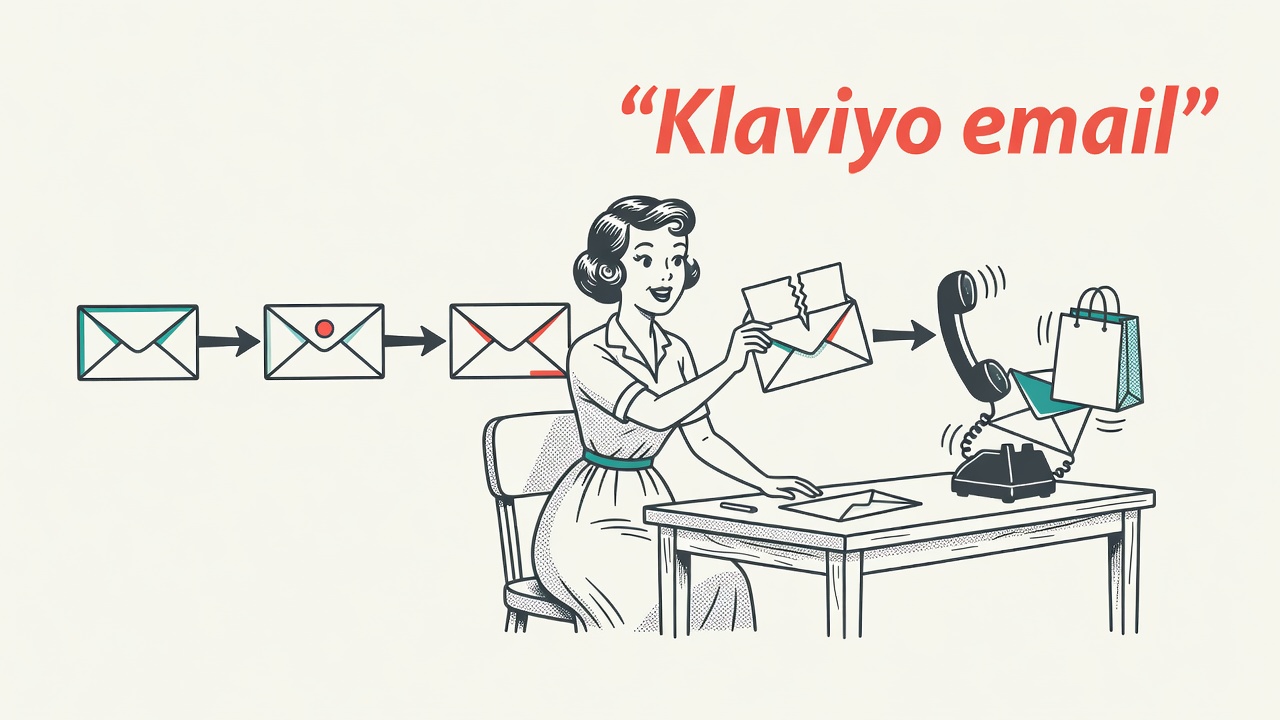
Standard email automation sends pre-written sequences triggered by time or simple actions: a welcome email three hours after signup, a cart reminder 24 hours later. It works. But it treats every customer the same. AI email marketing does something different. It learns from individual behavior to determine the best send time, the most relevant products to feature, and the subject line most likely to get a click from each specific recipient.
Klaviyo is the leading tool in this category for small and mid-size ecommerce stores. Its AI layer analyzes purchase history, browsing patterns, and engagement data to build flows that adapt over time. Klaviyo’s predictive analytics can identify customers likely to go dormant and trigger a win-back campaign before they drift away for good. That proactive approach lifts open rates 2 to 3 times compared to traditional batch campaigns. The free plan supports up to 250 contacts, so there is no cost barrier to getting started.
Yotpo extends AI-driven marketing into SMS and loyalty programs. When a customer submits a review, Yotpo’s AI can automatically trigger a personalized follow-up with a loyalty reward or a product suggestion based on what they bought. This creates a closed-loop system where marketing, reviews, and loyalty programs reinforce each other without manual work. That is the core distinction: standard automation runs on a schedule you build once. AI marketing adapts to what each customer actually does.
5. AI Visual Design and Creative Tools for Product Imagery
Visual content is one of the highest-leverage areas in ecommerce, and AI design tools have made professional-quality product imagery and ad creative accessible without a design background. Canva Magic lets you generate background-removed product images, branded social ads, and promotional banners from simple text prompts. Adobe Firefly, available inside Adobe Express, brings comparable capabilities with more control over lighting and composition for product shots. Both tools include free entry-level access.
For stores running paid ads on Meta or Google, AI creative tools reduce the time spent producing ad variants. Instead of briefing a designer for each promotion, you describe the visual you need and the AI generates a set of options to test. This makes creative A/B testing practical for small teams. Canva Magic’s free tier covers most small store needs; the Pro plan ($15 per month) adds brand kit integration and bulk image generation for larger catalogs.
6. AI Inventory Management and Demand Forecasting
Overstocking ties up cash. Stockouts lose sales. AI inventory tools address both problems by analyzing your historical sales data, seasonal patterns, and supplier lead times to generate restocking recommendations before problems compound. Inventory Planner integrates directly with Shopify and WooCommerce and generates purchase order forecasts based on actual sales velocity rather than manual estimates. It is one of the more practical paid tools for stores carrying more than a few dozen SKUs.
For stores just getting started, both Shopify and WooCommerce include native low-stock alerts that can trigger replenishment workflows at no extra cost. As your catalog grows, a dedicated inventory AI tool pays for itself by preventing both emergency restocking costs and lost-sale revenue from stockouts. Start with native alerts, then evaluate a paid tool once manual tracking becomes impractical.
7. Free AI Tools for Ecommerce Beginners With No Budget
Starting with a zero budget does not mean starting without AI. Several of the best free AI tools for small online stores cover the most essential functions right out of the gate. Shopify Magic is free for all Shopify merchants and handles product descriptions, email drafts, and FAQ generation. Canva Magic (free tier) gives you AI-assisted ad creative and product imagery without design experience. Tidio’s free plan supports a live AI chatbot on your storefront. ChatGPT’s free tier can generate product copy, email drafts, and customer service response templates on demand.
For email marketing, Klaviyo’s free plan supports up to 250 contacts with full automation features, which is enough for any store in its first year. Google Search Console is free and provides keyword performance data you can feed into your AI copy tools to make descriptions more discoverable. These five tools together cover content, creative, customer service, and email for $0 per month, making them the right starting stack for any new store operator.
As revenue grows, the upgrade path becomes clear. Email marketing platforms scale well once your list grows beyond the free tier. Pricing intelligence tools like Prisync (starting around $59 per month) pay for themselves once you have a catalog worth protecting. The U.S. Small Business Administration offers free guidance on evaluating technology investments for growing small businesses, including frameworks for calculating return on SaaS tools before committing to paid plans.
Quick Takeaways
- AI tools for small online stores now start at $0, with the most essential functions (copy, chatbots, email) available on free tiers from Shopify Magic, Tidio, and Klaviyo.
- AI product description generators can improve conversion rates by 10 to 30% and save hours every week for stores with large catalogs.
- AI chatbots like Tidio and Gorgias resolve up to 80% of customer inquiries automatically and recover 5 to 15% of abandoned carts through real-time checkout interventions.
- AI pricing tools like Prisync can improve gross margins by 5 to 15% by adjusting prices based on competitor data, demand signals, and your defined margin rules.
- AI email marketing (Klaviyo) outperforms standard automation by adapting to individual customer behavior, lifting open rates 2 to 3 times on average.
- Start with the one AI category that solves your biggest current pain point, then expand as you see measurable results.
Frequently Asked Questions
- Which AI tools integrate natively with Shopify vs WooCommerce?
- Shopify has the stronger native AI ecosystem: Shopify Magic (built-in at no cost), Rebuy, Tidio, Gorgias, Klaviyo, and Octane AI all install directly from the Shopify App Store with minimal configuration. WooCommerce support is solid but more plugin-dependent: Tidio, Nosto, Klaviyo, and Yotpo each offer WooCommerce integrations, though setup typically requires more manual steps than the Shopify equivalents.
- What AI tools specifically reduce cart abandonment for small ecommerce stores?
- Tidio and Gorgias both use AI-triggered chat messages to engage shoppers who stall on the checkout page, recovering 5 to 15% of abandoned carts on average. Klaviyo’s abandoned cart email flows adapt timing and product blocks to each customer’s behavior. Rebuy’s smart cart feature reduces abandonment by surfacing relevant upsells that increase perceived checkout value before the shopper exits.
- How can I use AI to personalize product recommendations for returning customers?
- Tools like Rebuy and Nosto analyze each returning customer’s purchase and browsing history to display tailored product recommendations across your homepage, product pages, email campaigns, and post-purchase flows. This approach increases average order value by 15 to 25% in most implementations, because shoppers are presented with products that match their demonstrated preferences rather than generic bestseller defaults.
- How much should a small online store budget for AI tools per month?
- A practical starting budget is $0 to $100 per month for most small stores. Free tiers from Shopify Magic, Klaviyo (up to 250 contacts), Tidio, and Canva Magic cover the core functions at no cost. The first paid upgrades worth prioritizing are an email platform with a larger contact tier ($20 to $45 per month) and a competitor pricing tool ($59 per month and up) once your catalog justifies the investment.
- Can AI pricing tools help a small store compete with larger retailers on price?
- Yes. Tools like Prisync track competitor prices in real time and trigger automatic price adjustments within rules you define, so you respond to market shifts without constant manual monitoring. AI pricing is not about racing to the lowest price; it means staying competitive on key products while protecting margins on others. Small stores using dynamic pricing tools consistently report gross margin improvements of 5 to 15% compared to manual pricing approaches.
Prices accurate as of September 7, 2026