
TL;DR: Home based ecommerce is accessible to almost anyone with a spare corner and a reliable internet connection. Pick a product category you can source or make, validate it before spending money on inventory, choose the platform that fits your margin structure, cover your legal basics, and build a simple fulfillment setup. Most people can place their first order without spending thousands of dollars upfront.
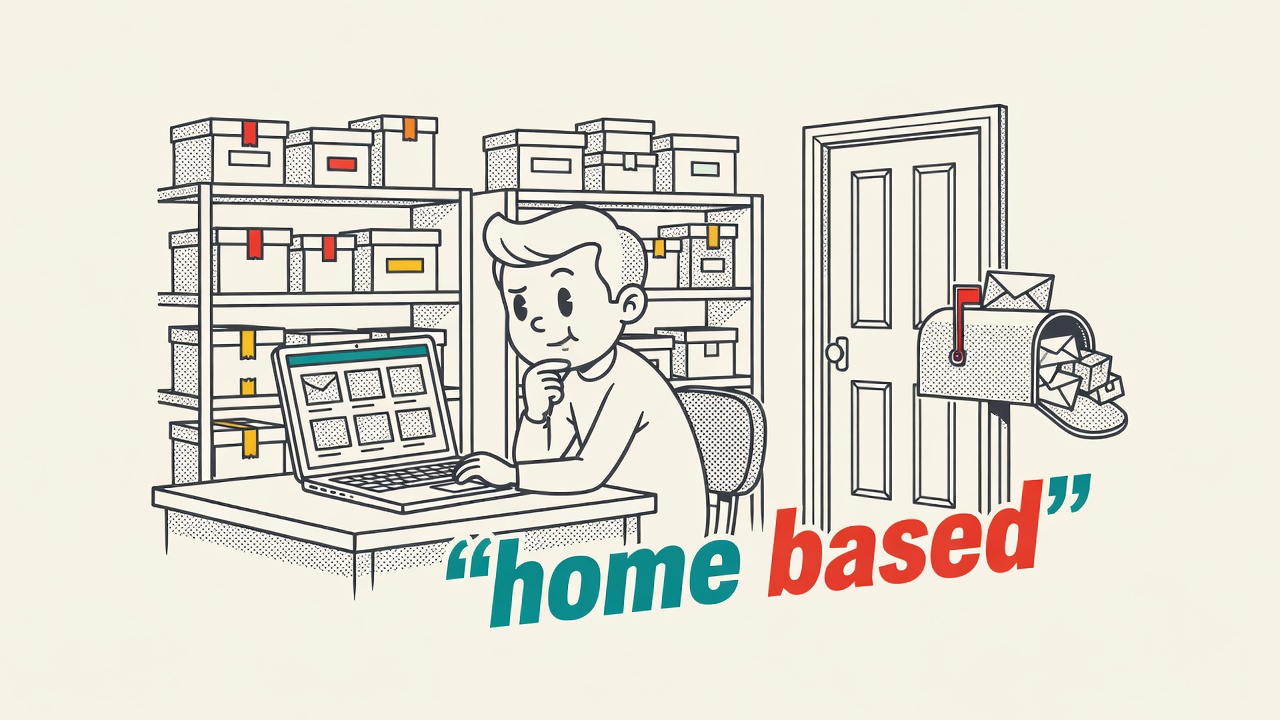
Home based ecommerce means running an online retail business entirely from your own living space, handling sourcing, packaging, and customer communication without a warehouse or shopfront. You manage the full order cycle from a home address using digital storefronts that connect you directly to buyers. It’s one of the lowest-barrier paths into retail that has ever existed, and it keeps getting more workable as platforms mature.
Best Products to Sell When Starting a Home Based Ecommerce Business
The easiest starting points for a home based ecommerce store are products that are small, light, non-perishable, and either handmade or sourced through print-on-demand. This combination keeps shipping costs predictable, avoids storage headaches, and lets you test market response before committing to deep inventory.
Print-on-demand items such as custom mugs, t-shirts, and wall art are popular with beginners because suppliers like Printful produce and ship each order on your behalf. You design the product once and only pay per unit sold, which means no upfront stock purchase. Digital products are even leaner: ebooks, templates, Lightroom presets, and printable planners cost nothing to store and have unlimited inventory. Many home sellers start with one of these categories, learn what their audience responds to, and then expand into physical stock once cash flow is established.
Handmade goods such as candles, jewelry, and resin art travel well and carry emotional value that justifies a margin above commodity pricing. The trade-off is production time. A common rule of thumb is to test at least three to five product variations before deciding what to scale, so you are not committing your packaging budget to a single design before you know what resonates.
Which Platform Fits Your Home Based Ecommerce Model: Shopify, Etsy, Amazon, or eBay
For most beginners, Etsy suits handmade or digital goods while Shopify works better when brand ownership matters more than marketplace traffic. Etsy charges a per-listing fee plus a transaction percentage on each sale; Shopify’s entry-level plan carries a flat monthly fee with no per-listing charge. Check each platform’s current pricing page before committing, as rates are updated periodically. Amazon offers unmatched traffic but compresses margins heavily. eBay remains strong for used goods and one-off items.
| Platform | Best For | Fee Structure | Brand Control | Built-in Audience |
|---|---|---|---|---|
| Shopify | Own-brand stores, scaling | Monthly subscription plus payment processing percentage | High | None, you bring traffic |
| Etsy | Handmade, vintage, digital | Listing fee plus transaction and payment processing percentages | Low to medium | Strong for niche crafts |
| Amazon | High-volume commodity goods | Referral percentage per sale plus optional fulfillment fees | Very low | Largest consumer base |
| eBay | Used items, collectibles, auctions | Final value fee as percentage plus optional listing upgrades | Low | Good for secondhand |
A practical approach for beginners is to open an Etsy shop alongside a basic Shopify store. Etsy gives you immediate access to buyers who are already searching for what you make. Shopify gives you an owned channel where returning customers can buy without paying Etsy’s transaction cut. Use Google Trends to check whether demand for your product category is growing, flat, or declining before you invest in either platform.
What Home Based Ecommerce Actually Costs to Start
Most home based ecommerce stores can open for well under a few hundred dollars. The unavoidable costs are a platform subscription or listing fees, basic photography, and any initial product cost. A print-on-demand or digital product model can start for close to zero beyond the platform fee.
A physical inventory model costs more. You need to buy stock, which typically means a minimum order quantity from a supplier. Budget for packaging materials, a postage scale, and a label printer if you plan to ship more than a handful of orders per week. Many sellers run their first months on a kitchen table with a borrowed camera and a roll of brown packing tape. The goal is to prove the concept with real sales before investing in better equipment.
Keep a simple spreadsheet tracking every cost from day one, including your own time at a realistic hourly rate. Home sellers often undercount labor in early pricing, which creates margin problems later. A clear cost picture lets you raise prices deliberately rather than reactively.
Legal Requirements for Home Based Ecommerce Sellers in the US and UK
In both the US and UK, home based ecommerce is legal but not regulation-free. The main obligations are registering your business, reporting income, collecting sales tax or VAT where required, and knowing when a home occupation permit applies. Skipping these basics can create tax liability or force a costly restructure later.
In the US, most solo home sellers start as sole proprietors, which requires no formal registration in most states, but you must report all income to the IRS. The IRS small business self-employed portal covers your filing obligations clearly. If you sell across state lines, US economic nexus rules mean you may need to collect and remit sales tax in states where you reach certain revenue or transaction thresholds. Check each state’s revenue department guidance for current thresholds.
In the UK, sole trader registration through HMRC is required once your trading income exceeds the annual trading allowance. The GOV.UK sole trader setup guide walks through registration, self-assessment tax returns, and National Insurance contributions. VAT registration becomes mandatory once your taxable turnover crosses the current VAT threshold (see the GOV.UK VAT registration page for the figure in force this tax year), regardless of whether you operate from home or a commercial address. Both countries require adequate records, so start a simple accounting file from your very first sale.
Worth Knowing: Running a home-based business may affect your homeowner’s or renter’s insurance policy. A large share of standard home insurance policies exclude commercial stock from coverage. Check with your provider before storing inventory worth more than a few hundred dollars, and ask specifically about parcel collections from a residential address, as some local planning rules restrict delivery frequency.
How to Validate Products Before Your Home Based Ecommerce Store Buys Inventory
Validation means confirming that real buyers will pay your target price before you spend money on stock. The fastest method is to list the product on Etsy or eBay with photos sourced legitimately from a supplier sample, then measure click-through and purchase intent before placing a wholesale order. If a sample listing generates no saves or messages within two to three weeks, the market signal is weak.
Search volume is a useful signal too. Use Google Trends to see whether interest in your product category is seasonal, rising, or declining. Cross-reference against top-selling listings on Etsy and Amazon to understand how many reviews market leaders have accumulated, which tells you roughly how saturated the category is. A category where the top ten sellers all have thousands of reviews is harder to enter than one where leading listings have fewer than a hundred.
Surveying your existing network is underrated. A short message to twenty contacts asking what they would pay for a described product, with no photo, tests the value proposition before aesthetics enter the equation. If nobody you know would buy it, a stranger on the internet probably will not either, at least not without significant marketing spend you cannot yet afford.
Pricing and Fulfillment for a Profitable Home Based Ecommerce Operation
Profitable home based ecommerce pricing covers product cost, platform fees, packaging, postage, and a margin for your time. A common rule of thumb is to price at three to four times your landed product cost for physical goods, then adjust based on what competing listings charge and what your product quality justifies. Never price below cost hoping volume will fix the math.
For fulfillment, a postage scale and a thermal label printer are the two highest-return pieces of equipment you can buy. Buying shipping labels through a discounted carrier service such as Pirate Ship typically costs less than paying retail at a post office counter, and the time saving compounds quickly once you are shipping daily. Store packaging supplies in a single dedicated area so packing an order takes under five minutes.
Returns policy wording affects conversion more than most home sellers expect. A clear, fair returns statement on your product page reduces buyer hesitation. State the return window, who pays return postage for which reason, and how refunds are processed. Write it in plain language and keep it consistent across every listing. Buyers who trust your policy are more likely to purchase and less likely to leave a negative review after a problem.
Pro tip from Ronen Abudi, e-commerce and GEO specialist (ronenabudi.com): When I started shipping from home, the single change that saved the most time was batching all packing into one daily session rather than packing each order as it came in. It takes discipline for the first week and then becomes automatic, keeping the rest of your day clear for sourcing and marketing.
Tracking Performance After Your Home Based Ecommerce Store Launches
Most home sellers concentrate on setup and then stop checking numbers after the first few sales. Reviewing a handful of core metrics each week tells you whether traffic is converting, where buyers drop off before checkout, and which products deserve more promotion.
Connect Google Analytics 4 to your store on launch day. Shopify has a native GA4 integration in the Online Store settings panel. For Etsy, add the measurement code through the platform’s external analytics field. Once live, check sessions, conversion rate, and average order value weekly. A low conversion rate for your product category usually points to a pricing, photography, or trust-signal problem rather than a traffic shortage.
Platform-native dashboards add detail that GA4 cannot capture. Etsy Shop Manager shows impressions and clicks per listing, revealing whether a title or thumbnail is failing to earn attention. Shopify Analytics shows which checkout step sees the most abandonment, often the page where shipping cost is revealed. Run one test at a time, a title edit, a photo swap, or a free-shipping threshold, and give each change two to three weeks before drawing a conclusion.
Home Based Ecommerce: Quick Takeaways
- Home based ecommerce is viable with minimal startup cost when you start with print-on-demand or digital goods.
- Platform choice depends on product type: Etsy for handmade, Amazon for volume, Shopify for brand ownership, eBay for secondhand.
- Validate product demand with a live listing or direct outreach before committing to inventory spend.
- Register as a sole trader or equivalent from your first sale to stay compliant with IRS or HMRC requirements.
- Use a thermal label printer and a discounted postage service to keep fulfillment fast and cost-efficient.
- Price at three to four times landed product cost as a starting baseline, then adjust to market conditions.
- Check your home insurance policy covers commercial stock before storing significant inventory at your address.
- Connect Google Analytics 4 on launch day and review sessions, conversion rate, and average order value each week to catch underperformance early.
Frequently Asked Questions About Home Based Ecommerce
- What digital products can I sell from home with no upfront cost?
- Digital products that carry no inventory cost include ebooks, PDF templates, spreadsheet tools, Lightroom presets, Procreate brushes, and printable planners. You create the file once and sell it an unlimited number of times. Platforms like Etsy and Gumroad handle delivery automatically after purchase, so you can run a digital shop without any physical fulfillment at all.
- How do I start dropshipping from home, step by step?
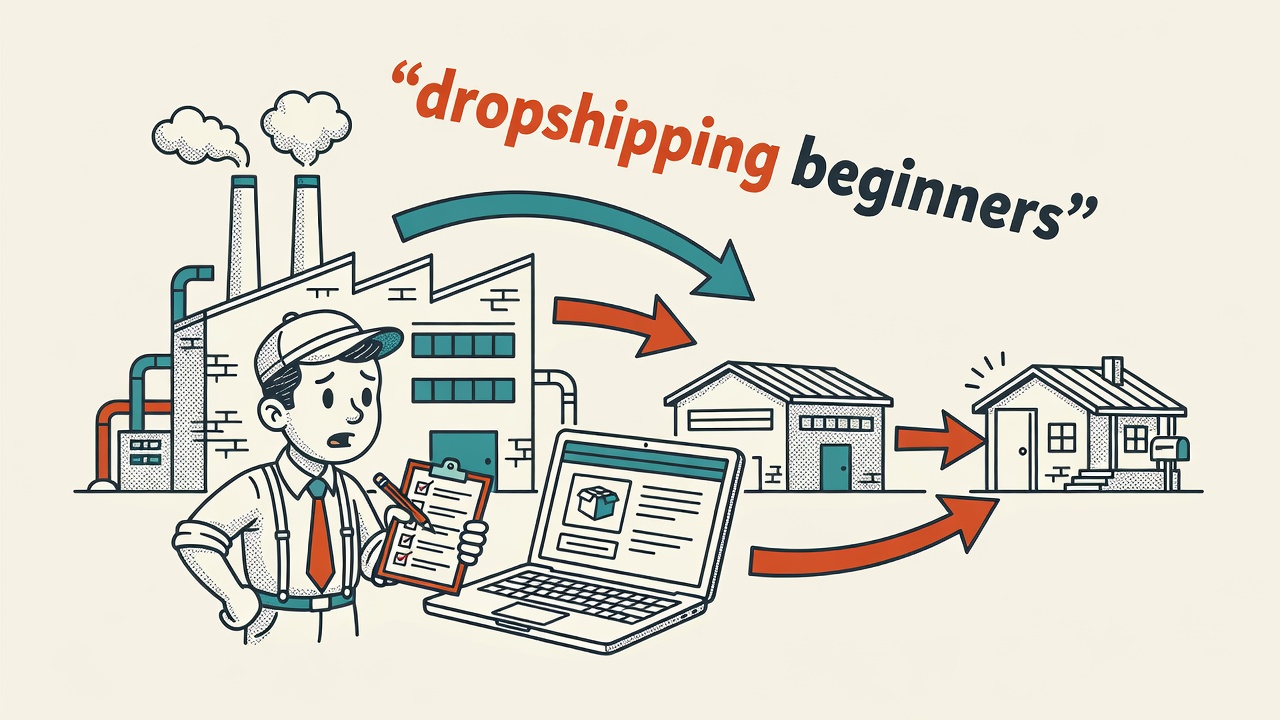
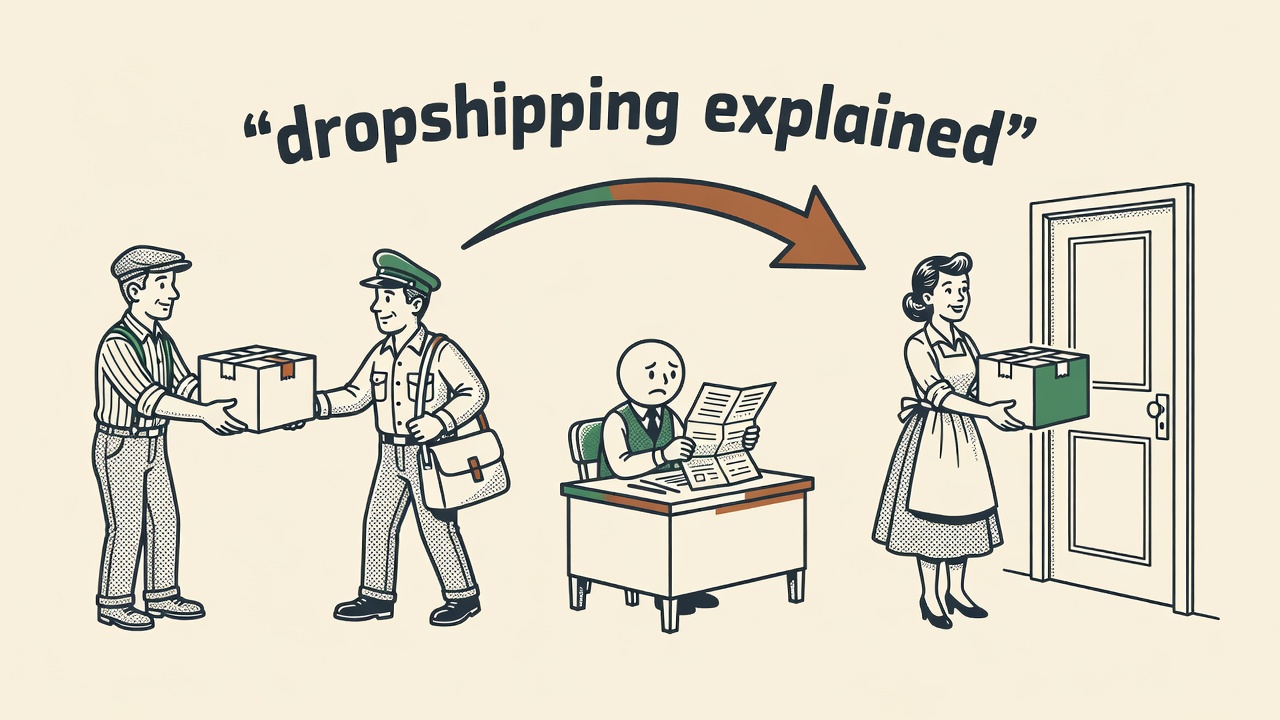
- To start dropshipping, pick a product niche and verify supplier availability on platforms such as AliExpress or a domestic wholesaler directory. Open a Shopify store and connect a dropshipping app to import product listings. Set pricing above your supplier cost plus platform fees. When a customer orders, the supplier ships directly to the buyer and you keep the margin difference.
- What are the UK legal requirements for selling from home?
- In the UK, you must register as a sole trader with HMRC once your trading income exceeds the annual trading allowance, detailed on the GOV.UK sole trader page. You file a Self Assessment tax return each year, pay Income Tax on profits, and pay Class 2 and Class 4 National Insurance. If turnover crosses the VAT threshold, VAT registration is also mandatory.
- How can I market a home ecommerce store on a very small budget?
- On a tight budget, focus on short-form video on TikTok or Instagram Reels showing your product being made or packed, because organic reach on these formats remains strong without paid spend. Build an email list from your first sale by including an insert card with a discount code. Posting three to five times per week compounds reach faster than occasional high-production content.
- How should I handle shipping and returns when fulfilling orders from home?
- Buy shipping labels through a discounted service rather than retail counter rates to reduce per-order postage cost. Print a clear returns policy on every listing stating the return window, which party covers return postage for each reason type, and your refund timeline. Pack orders in appropriate-size boxes to avoid dimensional weight surcharges. Keep a log of every shipment with tracking numbers so you can resolve delivery disputes quickly.