
TL;DR: Dropshipping is a no-inventory ecommerce model where a supplier ships orders directly to your customers. You can launch for under $100 or budget up to $3,000 for a full setup with samples and ad testing. Product research, supplier vetting, and consistent organic content separate stores that grow from ones that quit.
Dropshipping for beginners is more accessible in 2026 than it has ever been, with faster store builders, sharper research tools, and clearer execution playbooks. This guide covers the model, the budget realities, niche selection, product research, supplier vetting, and the marketing approach that gives new stores the best shot at real traction.
What Is Dropshipping and How Does It Work in 2026?
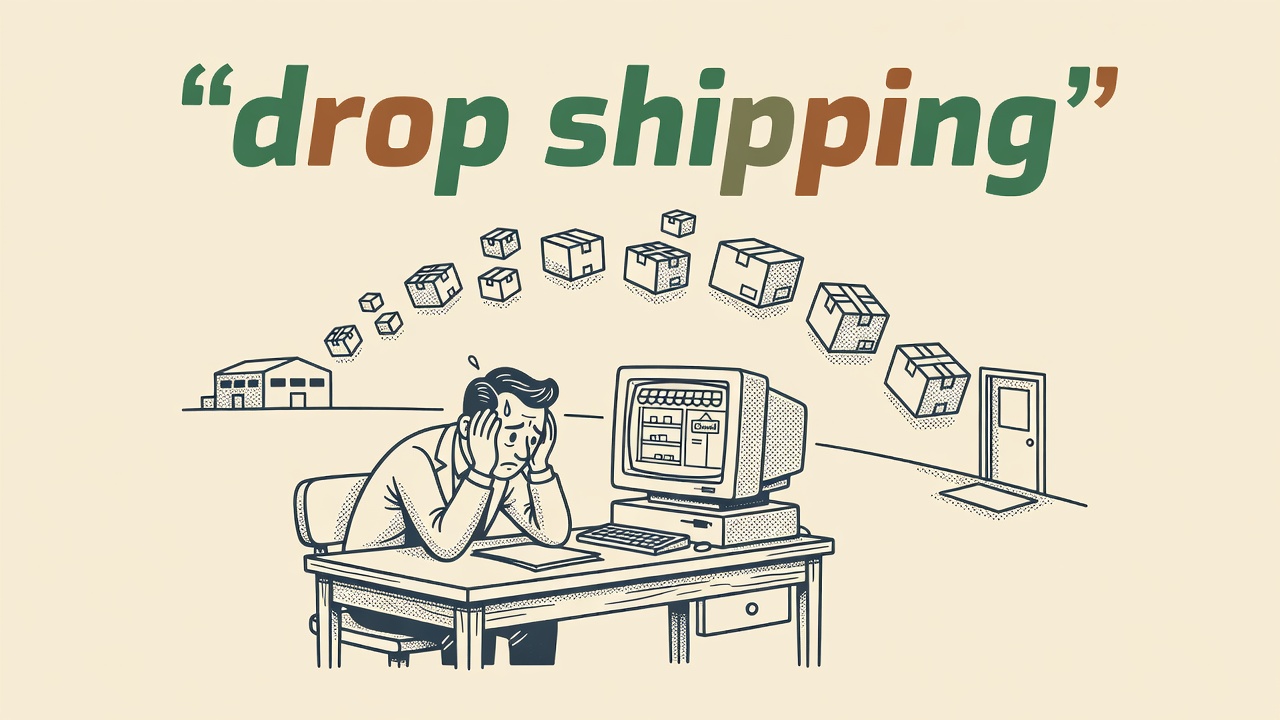
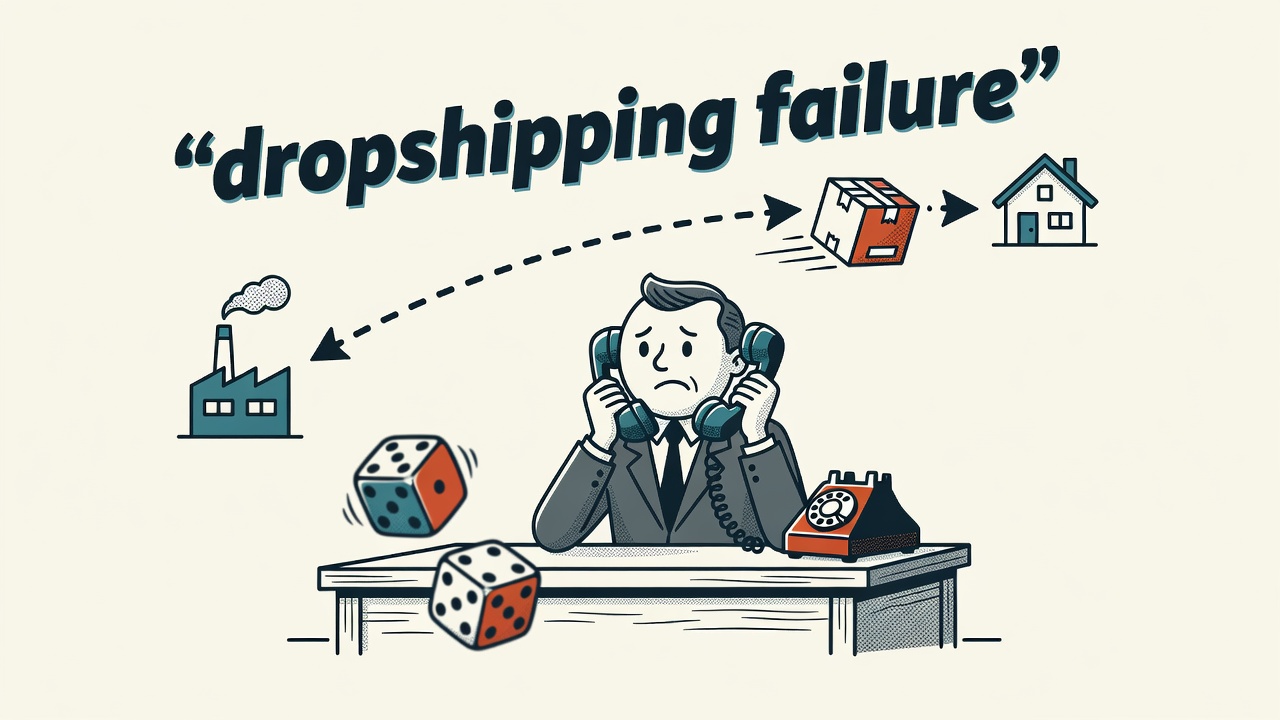
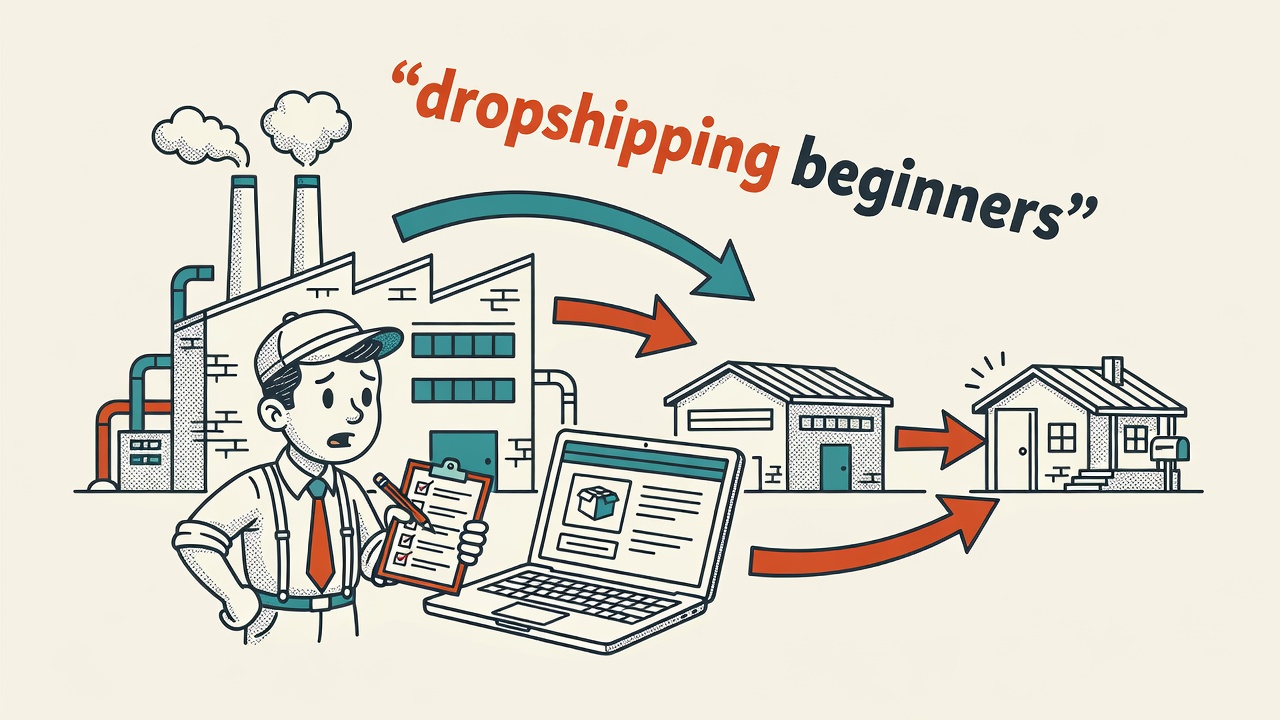
Dropshipping is an ecommerce fulfillment model where you list products in your online store, collect payment from customers, and a third-party supplier ships the order directly to the buyer. You never hold inventory or pack a single box. Your income is the margin between your retail price and the wholesale cost you pay the supplier.
The mechanics have not changed, but the tooling around them has sharpened considerably. Shopify integrates directly with supplier networks so that a customer purchase can trigger an automatic order to your supplier without any manual steps. AI store builders cut setup from days to hours. Product research platforms pull demand signals from multiple marketplaces in one dashboard. The model is the same as it was five years ago; the speed and data quality of execution in 2026 are meaningfully better.
The business has three working parts: your storefront, your supplier relationship, and your marketing. The storefront is the easiest to build. The supplier relationship is the hardest to get right. The marketing is where ongoing work lives. All three have to function together for the store to be profitable.
How Much Money Do Beginners Need to Start Dropshipping?
Startup cost depends on how you launch. According to HaloThemes (2026), you can start dropshipping for under $100. A basic Shopify plan and a free theme are enough to get a store live. That lean approach works, but it leaves very little room for sample orders or paid marketing, which means you will depend entirely on organic content for early traffic.
Doba (2026) recommends a budget of $1,500 to $3,000 to cover legal business formation, platform subscriptions, sample testing, and initial marketing. That figure reflects a more complete launch: a registered business entity, sample orders to verify quality before listing, and enough ad spend to gather real conversion data. Most beginners who build stores that stick land somewhere in that range. The U.S. Small Business Administration publishes free guidance on business formation options at sba.gov.
| Launch Tier | Budget Range | What It Covers | Best For |
|---|---|---|---|
| Lean Start | Under $100 | Platform plan, free theme, organic marketing only | Testing the model before committing |
| Mid-Range | $300 to $800 | Platform, a few samples, small ad test budget | Beginners with some savings to deploy |
| Full Launch | $1,500 to $3,000 | Business formation, samples, subscriptions, ad spend | Serious launch with validation runway |
HaloThemes (2026) also notes that a starting ad budget of $5 to $10 per day is enough to gather early conversion data when you are ready for paid traffic. The rule most practitioners follow: keep paid ads off until you have validated a product with organic content. Spending on ads before you know a product converts is the fastest way to burn through your budget with nothing to show for it.
Picking a Niche and Finding Winning Products
Your niche shapes every downstream decision: which suppliers you approach, which audience you target, and which platforms you advertise on. A focused niche with a clearly identifiable buyer outperforms a broad, sell-everything store for beginners. Solid starting points include home office accessories for remote workers, pet care products for apartment dwellers, and hobby supplies for active retirees. Each has a defined buyer and year-round demand rather than a seasonal spike.
Product research is how you confirm demand before committing. Google Trends shows whether search interest in a product or category is rising, flat, or declining. Cross-check it with TikTok Creative Center, which reveals what product ad creatives are generating the most reach in your category. Amazon’s bestseller and movers-and-shakers sections show what shoppers are actively buying right now. Use all three signals together rather than relying on any single one.
A reliable retail price range for beginners is $25 to $80. High enough to leave a real margin after supplier cost and shipping, low enough that buyers do not overthink the purchase. Avoid products already saturated with similar ads at thin margins. Instead, look for items that solve a visible problem, photograph well, and show rising search interest with limited current ad competition.
Research Tools That Support Dropshipping for Beginners in 2026
You do not need an expensive software stack to research products effectively. The most useful tools for dropshipping for beginners in 2026 are either free or low-cost. Google Trends and TikTok Creative Center are both free and give you real demand and creative signal data without requiring a paid account.
For deeper sourcing and product research, AutoDS is a widely used platform among beginners. It aggregates product data from AliExpress, Amazon, and other marketplaces, flags items with strong sales velocity, and handles order routing and price monitoring once you are live. TeemDrop is another sourcing option worth exploring, particularly for sellers targeting specific regional markets. For direct factory-level sourcing, 1688 offers low wholesale prices for Chinese-manufactured goods, though it typically requires a sourcing agent if you do not read Mandarin.
AI store builders have reduced the technical lift of going live. Several Shopify apps now generate product descriptions, meta tags, and ad copy from a brief. They are a genuine time-saver during store setup, but review every output before publishing. AI-generated copy often lacks product specificity and needs editing to match your brand voice and accurately represent what the item actually does.
Pro tip from Ronen Abudi, e-commerce and GEO specialist (ronenabudi.com): Before spending a dollar on ads, spend an afternoon on TikTok Creative Center filtering by your product category and the past 30 days. The creatives with the most reach show you what angle is resonating right now, and that intelligence cuts weeks off your trial-and-error ad testing.
How to Find Reliable Dropshipping Suppliers in 2026
Supplier reliability is the part of dropshipping for beginners that most guides underplay, and it is the part that causes the most real problems. A supplier who ships late, packs carelessly, or goes quiet when issues arise generates refund requests and negative reviews that are hard to recover from when your store is new. Vetting suppliers before listing their products is not optional.
Before committing to any supplier, check their platform reviews and look specifically at negative feedback about shipping times and product accuracy. Send a pre-sale message and note how fast and how clearly they respond. A supplier who takes 48 hours to answer a basic question before a sale will take longer when a customer’s package is missing. Check their stated order defect rate, their return policy, and whether their active order volume suggests they are running a real operation rather than a part-time side business.
For beginners, starting with a vetted supplier network reduces early risk. AutoDS pre-screens suppliers and automates order routing, tracking updates, and price-change alerts. This removes significant manual work and catches problems like sudden price spikes before they destroy your margin. For sourcing beyond standard supplier directories, 1688 and direct factory outreach via a sourcing agent can unlock better pricing once you have confirmed demand.
Validate First: Samples, Organic Testing, and Smart Scaling
Ordering a sample before listing a product is one of the most consistently recommended practices in 2026 dropshipping guides, and one of the most skipped by impatient beginners. A sample lets you verify actual product quality against the listing photos, check real shipping times to your target country, and produce original photography and video content for your store and social channels. It also gives you a concrete way to catch supplier problems before your customers do.
Product validation starts with organic content before paid traffic. Post a short demo video on TikTok or Instagram Reels showing the product solving a real problem, link to a simple landing page, and track clicks and engagement. If an organic video generates interest with zero spend, that is a green signal to test with a small ad budget. A modest daily budget keeps risk contained while you gather real conversion data from a live audience.
Before your first paid campaign goes live, set up the tracking infrastructure that will inform every decision from that point forward. Connect Google Analytics 4 to your store to capture session data, traffic sources, and on-site behavior. Install the Meta pixel and TikTok pixel before running ads on either platform; without them your ad accounts cannot record purchase conversions and you cannot optimize for buyers, only for clicks. Shopify Analytics captures order-level data by default, but it does not replace pixel-level attribution that ties ad spend directly to purchases. Setting all of this up before you spend a dollar on paid traffic means every campaign starts with clean data rather than a gap you cannot fill retroactively.
Focus on one country or one narrow audience segment during validation. Many beginners try to sell globally from day one. A tighter geographic focus gives you cleaner data, a more relevant audience, and faster learning cycles. Once you have confirmed a product converts and the fulfillment experience works end to end, then expand.
Quick Takeaways
- Dropshipping lets you sell without holding inventory. Your supplier ships directly to your customer and you keep the margin.
- Budget varies by launch approach. A lean start costs very little; a full launch with samples, business setup, and ad testing needs more runway.
- Validate products with organic short-form content before spending on paid ads. Real engagement data is worth more than guesses.
- Always order a sample before listing a product. It catches quality issues early and gives you original content for marketing.
- Vet suppliers carefully: check ratings, message response time, and written return policy before you commit.
- Use Google Trends and TikTok Creative Center together to spot rising demand before a product becomes saturated.
- Install Google Analytics 4, the Meta pixel, and the TikTok pixel before your first paid campaign. Conversion events only record from the moment of installation; retroactive data gaps cannot be recovered.
- Focus on one country and one narrow audience during validation. Broad launches produce messy data and slow learning.
Frequently Asked Questions
- Is dropshipping for beginners still a viable business model in 2026?
- Dropshipping remains a practical entry point into ecommerce in 2026. The market is more competitive than it was several years ago, but better research tools and supplier platforms have lowered the barrier to a proper launch. Beginners who do solid product research, vet suppliers carefully, and build organic content before scaling with paid ads can still build profitable stores.
- How long does it take to make a first sale in a new dropshipping store?
- There is no fixed timeline. Stores using organic short-form video on TikTok or Instagram can see first sales within days if the product and content resonate. Stores relying on paid ads typically need one to three weeks of testing before finding a converting audience. Creative quality and product-market fit matter more than the specific channel you choose.
- What platform should dropshipping beginners use in 2026?
- Shopify is a commonly chosen platform for new dropshipping stores because of its large app ecosystem, straightforward product management, and direct integrations with supplier tools like AutoDS. It is not the only option, but its beginner-friendly setup and supplier automation integrations reduce a significant amount of manual order management work from the start.
- Should I order a sample before listing a dropshipping product?
- Yes, and it is one of the highest-return steps a beginner can take before going live. A sample lets you verify actual product quality against supplier photos, confirm real shipping times to your target market, and produce original photos and video content for your listing and ads. Skipping it is a common early mistake that leads to customer complaints and refund requests.
- How do I identify a saturated dropshipping product before I list it?
- Check Google Trends to confirm interest is rising rather than peaking or in decline. Filter TikTok Creative Center by your product category to see how many sellers are running similar ad creatives. When a product appears in dozens of ads with nearly identical angles and pricing, margins are likely already compressed. Look for rising demand signals paired with limited current ad competition.